Antonioni is the architectural auteur. He uses the built environment to depict the alienation of modern life, and emphasises landscape and architecture to diminish the human to their surroundings.
Being a fan of architecture and a cinematography lover, his films blow me over with their poetic and considered photography.

L'Eclisse is the final film in a loose thematic trilogy beginning with L'Avventura (1960) and La Notte (1961), and it is possibly the most powerful and beautiful of the three.
The opening scene, shown below, depicts the emotionally exhausting break-up of Vittoria (Antonioni's muse Monica Vitti) and Riccardo (Francisco Rabal). The scene is quiet, with little dialogue and the continuous humming of a desktop fan, a fantastic inclusion to the scene. The mise-en-scene is crucial to the narrative, Antonioni using the room's dimensions, its objects, furniture and artworks to depict and accentuate the emotional states of the characters.
The opening scene, shown below, depicts the emotionally exhausting break-up of Vittoria (Antonioni's muse Monica Vitti) and Riccardo (Francisco Rabal). The scene is quiet, with little dialogue and the continuous humming of a desktop fan, a fantastic inclusion to the scene. The mise-en-scene is crucial to the narrative, Antonioni using the room's dimensions, its objects, furniture and artworks to depict and accentuate the emotional states of the characters.
 |
| Francisco Rabal |


 |
| Monica Vitti |
It begins by revealing small details of the room and its occupants, giving an incomplete view of the scene, tactically showing fractured shots of the setting's elements, whilst gradually allowing viewers to piece together the scenery, and the plot.
The Criterion Collection cites Michelangelo Antonioni's favourite themes as "alienation and the difficulty of finding connections in an increasingly mechanised world" and L'Eclisse's opening scene is testament to this.


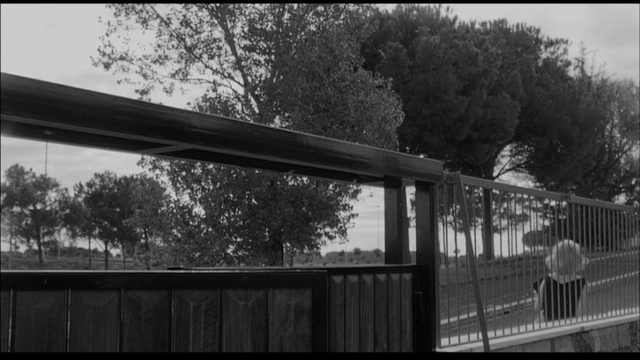

If you're a lover of beautiful cinematography, considered mise-en-scene, architecture, the landscape and looking at beautiful people, L'Eclisse is surely for you.
Antonioni is a master of film art, and it's a pleasure to see the world through his eyes.


 |
| The director uses the art in the apartment as a visual representation of the character's interior states |

 |
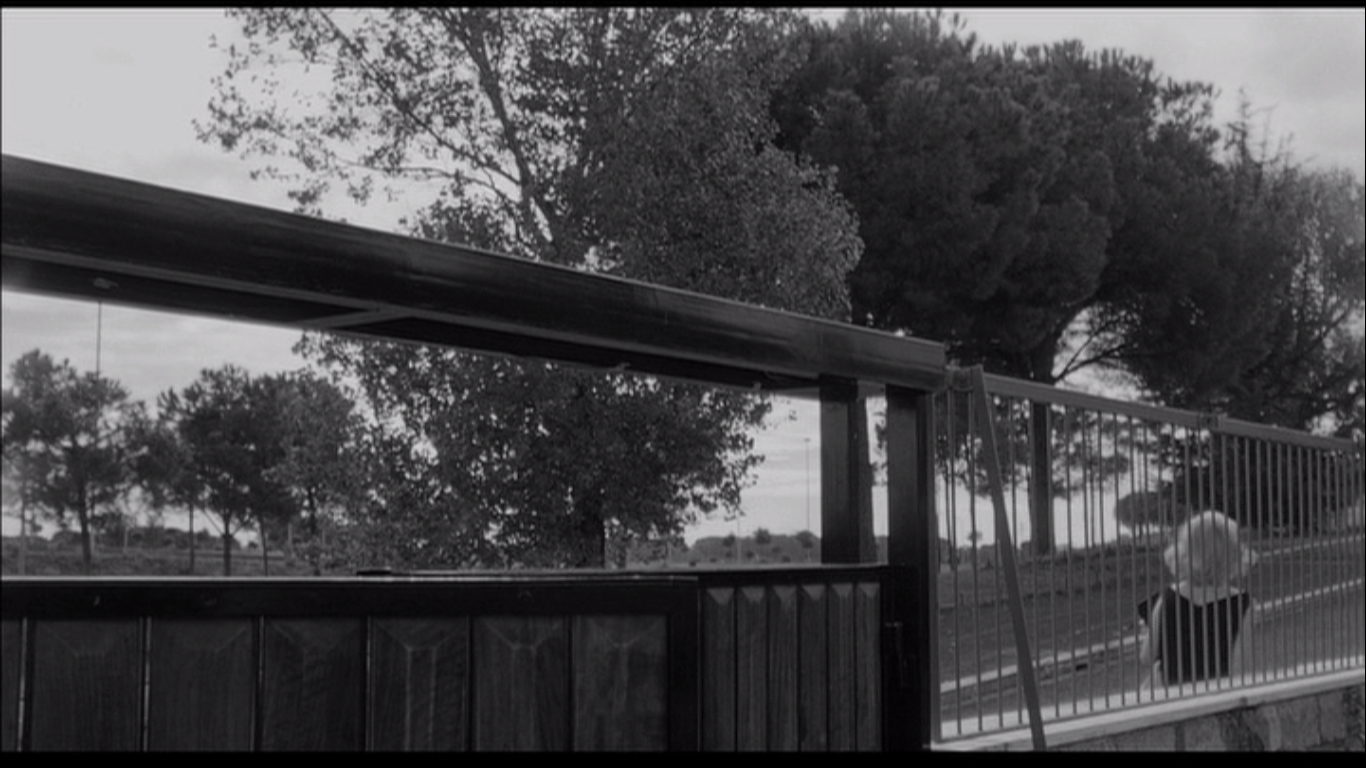
| This Roman structure alludes to the nuclear war threat, highlighted in the film's closing scene |
Vittoria is disillusioned, alienated, and drifting amongst the solidity of the modern built environment, unable to make meaningful connections with other people - although really, all the characters share these struggles. This is tellingly shown in the last scene that Vittoria and Riccardo share together, where after futilely trying to mend their relationship, Riccardo walks away, not even attempting to look back at his ex-fiance.

 |
| Riccardo walks away from Vittoria, never looking back |
This is a very powerful and emotional film, Antonioni expertly manipulating images and mise-en-scene to depict the struggles of modern life.
If you're a lover of beautiful cinematography, considered mise-en-scene, architecture, the landscape and looking at beautiful people, L'Eclisse is surely for you.
Antonioni is a master of film art, and it's a pleasure to see the world through his eyes.


